InterviewsHealthcare & Biotech
Ryan Saavedra on Why Robotic Hands Break at Reliability
The CEO of Alt-Bionics on why reliability, not biomimicry, remains the hardest constraint, what a two-phalanx design enables, and why the human must stay in control.
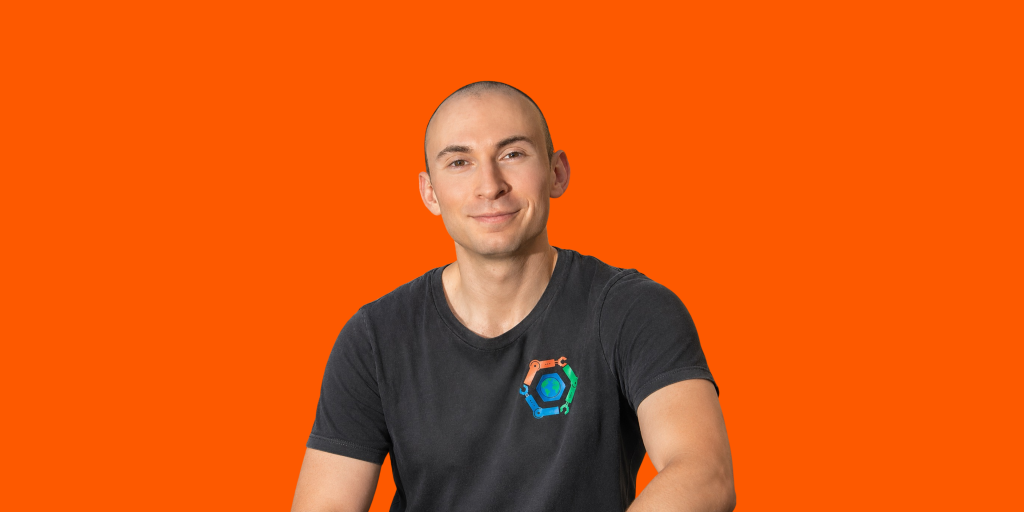
In this interview, Ryan Saavedra, CEO of Alt-Bionics, explains why reliability, not biomimicry, remains the hardest constraint in prosthetic and robotic hands, and why serviceable hardware matters more than added complexity in real-world use.
Ryan Saavedra answered AIPressRoom's questions in writing; the answers are published as received.
When you began architecting Genesis, what constraint shaped every other decision?
The constraint was understanding what humans actually need from a prosthetic hand, not what was technically impressive. A robotic hand can't fully replicate biological dexterity, but in other ways, it can exceed it. The question was always: which of those differences genuinely serve the person wearing it, and which just serve the engineering? Everything had to earn its place by answering a real human need.
EMG input is inherently unstable. How does your system maintain consistent control when biological signals shift in real time?
Frankly, surface EMG is an imperfect input, and anyone claiming otherwise isn't being honest with you. Signal quality shifts with sweat, muscle atrophy, even minor changes in how the device sits on the limb. Our proprietary algorithms are built to account for that variability in real time, and our users report strong satisfaction with the control experience as a result. But we're honest about the ceiling. That's why we're watching developments like Phantom Neuro and Blue Arbor closely. More direct neural interfaces are where reliable, versatile control ultimately lives, and we intend to be ready when that technology matures.
Where did the architecture nearly break during development?
Early on, we committed to 3D printing the entire hand. The first trial units were fully MJF printed, and certain parts kept failing. The parts simply weren't consistent enough from unit to unit at the precision we needed. We moved those critical components to machined parts, and the reliability difference was immediate. It was the right call, but it cost us a lot of time we hadn't planned for.
What did you intentionally choose not to build into Genesis?
A three-phalanx design was something we looked at but walked away from. The third joint adds complexity without adding proportional function for most of what users actually need a prosthetic hand to do. More joints means more components, more potential failure points, and more things that need to stay in sync for a grip to feel natural. A two-phalanx design gives reliable, consistent flexion with less mechanical overhead. The hand does what it needs to do, and it holds up better doing it. We focused on something people could depend on rather than chasing biological anatomy for its own sake.
When real users began training the system, what surprised you most about how they interacted with it?
Honestly, the tasks. We designed for versatility, but you still carry assumptions about what that means in practice. Then you watch someone crocheting with it. Or tying their shoes. Or heading out to work on an oil rig. Those aren't use cases we sat down and engineered for specifically, and seeing them happen was something else entirely. It tells you that when you get the fundamentals right, people just naturally use it for their life. That's been the most humbling part of this process.
Modular hardware lowers maintenance time. How did you determine the point where modularity would begin to weaken structural integrity?
Failure testing. Modularity was built into the foundation from the start and it was the only way we were willing to build the hand. If we couldn't make it work structurally, we weren't going to build the hand at all. So we tested every viable 3D printing material until we understood exactly where each one would give. We eventually decided on one that doesn't deform on impact, and when it does finally fail under enough stress, it breaks clean rather than shattering. The modularity and structural integrity were designed simultaneously to work together, and failure testing is what got us there.
Choosing MJF and Nylon PA 12 defines the product physically. What does that manufacturing approach enable beyond cost efficiency?
Cost-effective scaling and prototyping. With MJF 3D printing we can produce up to 75 hands per printer per week (3,900 per year), and we can easily add printers as demand grows. But the bigger thing is that we're prototyping and producing in the same material. Injection molding can't offer that at any reasonable cost. What you're testing is what you're shipping, which changes how fast you can move and how confident you are in the result.
Alt-Bionics positions Genesis as a more accessible alternative to traditional bionic hands. How did you decide accessibility would be part of the engineering mandate?
I grew up on movies that conveyed the heart of engineering as contributions to humanity. I grew up adamantly believing that advancements in engineering should benefit the world and those who need the advancements most. After finding out how much these devices cost people and how few would realistically be able to afford them out of pocket, this was what prompted me to start the company. The mission was non-negotiable.
Surge Hand serves both rehabilitation and robotics. What changes when the end user is no longer human?
Nothing changes, and that's the point. Humanoid robots are an homage to human capability. The entire world was built by hands, for hands. Everything in it was designed around what humans can do and how humans interact with it. So when you design a hand that genuinely serves a human being, you've already designed for the robot. Surge came out of that foundation. It's stronger, faster, and more durable, and those improvements cycle back into the next generation of prosthetics. Humans stay at the center. That was true when we started and it drives everything forward.
What misconception about robotic hands do you think still dominates the industry?
That you need a high degree-of-freedom hand to be useful. The industry is chasing biomimicry without asking whether it's actually necessary for the tasks these hands need to perform. We measure efficacy differently. At Alt-Bionics we classify our hands by the percentage of human level tasks they can complete. That framing came from going deep on the fundamentals. Hand surgeon consultations, full hand and arm dissection labs, independent research, and frankly my own experience having surgery and missing degrees of freedom on my own hands. What that work showed us is that the majority of human tasks don't require replicating the human hand. They require understanding which capabilities actually matter and building for as many of those as possible within the most durable, serviceable architecture.
After experiencing your own hand injury, how did your approach to technical trade-offs change?
It grounded everything in reality. When you've had surgery on your own hands and start living with missing degrees of freedom, you stop theorizing about what matters and start knowing. You also start looking at your hands much differently. I understood firsthand what tasks become difficult, which ones remain accessible, and where the real difficulty is in daily life. That experience made me much harder to convince of complexity for its own sake. If a design decision couldn't be justified by what a person actually needs to do with their hand, it didn't belong in the product.
As intelligent hardware becomes more integrated with the body, what kind of human-technology relationship feels worth building?
Symbiotic technology. The technology should expand what a person can do intuitively, not make decisions for them. I think there's a version of this that gives people control over aspects of their hand they never had before. But we will never have assumptions built into the device. The moment the hand starts anticipating instead of responding, you’ve taken control away from the person wearing it, and that opens up problems we're not ready to solve and probably shouldn't be solving that way. So ultimately, just ensuring the human stays in control.
About
- Interviewee
- Ryan Saavedra · CEO
- Company
- Alt-Bionics
- Country
- United States
- Sector
- Healthcare & Biotech
- Topics
- accessibility · additive-manufacturing · bionic-hands · emg-control · prosthetics