Signal
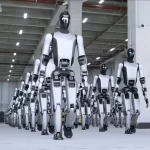
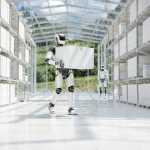
Boston Dynamics has unveiled the product version of its new all-electric Atlas robot, marking its transition from a research platform to a commercial industrial asset. The first production fleets are scheduled to ship in 2026 to Hyundai’sRobotics Metaplant and Google DeepMind.
Backdrop
This generation of Atlas is engineered specifically for automotive supply chain compatibility and mass-market reliability.
- Performance Specs: The electric Atlas features 56 degrees of freedom, a 50kg (110 lbs) lift capacity, and a 2.3mreach—surpassing human-level dexterity in high-payload environments.
- Operational Autonomy: It supports autonomous battery hot-swapping and integrates with industrial Orbit™ software for fleet-wide task replication.
- Cognitive Layer: A new partnership with Google DeepMind will integrate foundation models directly into Atlas, enabling advanced cognitive decision-making in unstructured factory settings.
- Manufacturing Scale: Backed by Hyundai, the company aims for a production capacity of 30,000 units per yearat its new robotics facility.
Why it matters
The “Hyundai-Atlas” deployment represents the most aggressive play for “Humanoid Sovereignty” in heavy industry.
- Supply Chain Verticalization: By utilizing Hyundai Mobis for actuators and automotive-grade parts, Boston Dynamics is solving the “cost-per-unit” crisis that has historically plagued humanoid robotics.
- Productivity vs. Grid Limits: Similar to the NYGC grid-independent model, these autonomous fleets allow for 24/7 manufacturing uptime without human-centric HVAC or lighting requirements, effectively “bypassing” traditional labor constraints.
- AGI Enters the Physical Layer: The integration of DeepMind intelligence creates a feedback loop where physical performance data trains the next generation of VLA models—a trajectory that mirrors the infrastructure-compute synergy of the OpenAI-Cerebras deal.
Industry Impact
- The “Customer Zero” Benchmark: Following the Siemens-Humanoid PoC, Hyundai is positioning itself as the premier testing ground for “robot-native” manufacturing, potentially setting the standard for the entire global automotive sector.
- Capital Floor Shift: The $26 billion investment from Hyundai into U.S. robotics infrastructure confirms that the entry price for “Humanoid Factories” is now measured in billions, not millions.
Counter-signals & Friction
Despite the technical breakthrough, the deployment faces significant non-technical headwind:
- Labor Friction: The Hyundai labor union has already signaled resistance, reportedly blocking the initial RMAC deployment pending formal guarantees on job security and human-robot displacement ratios.
- The “Battery Tax”: While hot-swapping solves uptime, the energy density requirements for a 50kg-lift humanoid remain extremely high; without a breakthrough in solid-state energy, operational costs may still exceed specialized single-task automation in low-complexity lines.
- Safety Certification Lag: Fenceless guarding in “human-dense” zones remains a regulatory grey area; there is a risk that Atlas will be restricted to “islands of automation” rather than full-floor integration for several more years.
What to watch
- The 2026 RMAC Launch: Whether the first 100 units at Hyundai can achieve a 95% uptime in a 24/7 autonomous shift.
- The “Stargate” Connection: How the massive capital flowing into AI through deals like the OpenAI 800B talkswill accelerate the acquisition of humanoid startups by “Big Compute” players seeking to own the physical interface of AGI.