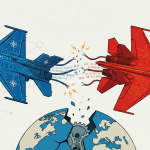
The Big Picture: The assumption that automotive safety technology (ADAS) can be directly scaled down for micromobility is a flawed architectural premise. Car-grade safety stacks are built for planar stability, high-power compute, and thermal management—conditions that do not exist on two wheels. This category is now entering a forced pivot: moving away from automotive-grade sensors toward vision-first architectures designed for rider-scale dynamics.
The Structural Mismatch: Planar Bias Current automotive perception models are trained on fundamentally different motion dynamics. Cars move in predictable, largely planar trajectories. Bicycles and motorcycles are in constant flux, defined by pitching, rolling, and leaning into corners.
Luna Systems CEO Andrew Fleury exposes this “planar bias” as a structural mismatch rather than a hardware limitation. In his analysis, automotive ADAS assumptions break down on two wheels because the datasets fail to capture the high-dynamics physics required for reliable risk detection in micromobility.
The Economic Barrier Beyond physics, the automotive approach faces a cost and power paradox. Car ADAS assumes continuous power availability and large physical space for sensor arrays (Radar, LiDAR, and multi-camera stacks).
On a bicycle, power is scarce and weight is a critical constraint. Automotive-grade silicon requires active cooling and high-cost sensors that the micromobility category cannot economically tolerate. This has forced the development of monocular vision-first systems that replace expensive sensor fusion at the vehicle level with intelligence learned through sensor fusion at the data level.
The Pivot: From Compliance to Empowerment We are witnessing a shift in the primary utility of safety data. Early micromobility AI was enforcement-led, designed to detect sidewalk riding for city operators. The next phase is empowerment-led.
Fear remains the primary barrier to adoption. According to data from Ipsos Mori, six in ten people avoid riding due to perceived traffic risks. The industry is responding by transitioning from “proximity sensing” to “situational intelligence.” A basic sensor accessory detects an object; a true Advanced Rider Assistance System (ARAS) interprets a conflict.
This transition allows bikes to act as distributed sensors, surfacing “blackspots”—infrastructure failures that lead to repeated near-misses. It is a move from reactive accident reporting to proactive risk modeling.
The Bottom Line: The competitive boundary in the two-wheel market is shifting from mechanical power to perception capability.
Traditional brands relying on off-the-shelf automotive sensors will face increasing limitations in reliability and cost. The industry is no longer just building faster vehicles; it is building systems that compensate for infrastructure gaps through localized, vision-led intelligence.