Tobias Antonsson on the Constraints Shaping Micro-Robotics
The CEO of Bitcraze AB on why micro-autonomous systems are insulated from data center demand, what open hardware needs to be sustainable, and why the physical world remains the most interesting domain.
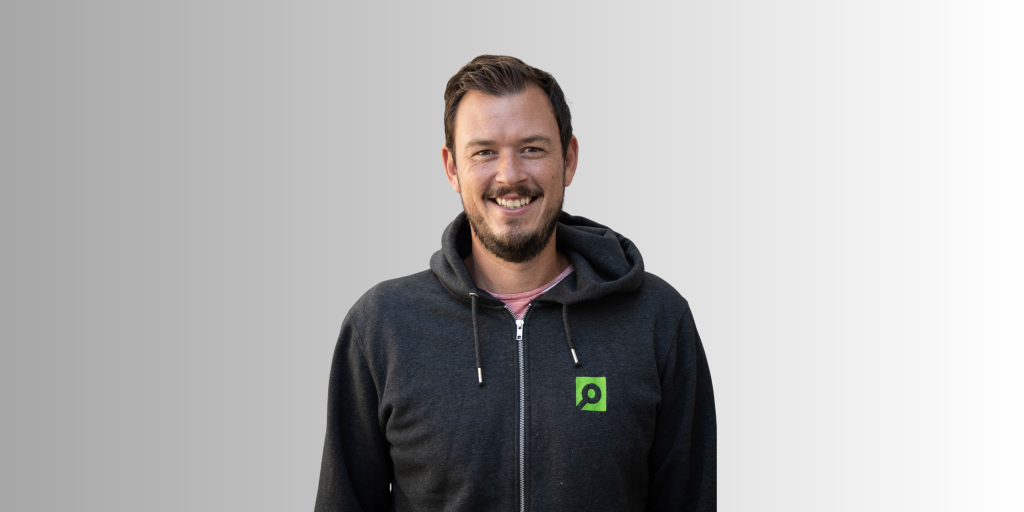
In this conversation, we spoke with Tobias Antonsson, CEO of Bitcraze AB, about the engineering constraints shaping micro-autonomous systems, the trade-offs behind open hardware, and why low-power physical robotics still matters in an AI era increasingly focused on virtual agents.
Tobias Antonsson answered AIPressRoom's questions in writing; the answers are published as received.
In 2026, as memory and silicon capacity increasingly favor large AI data centers, what structural trade-off do you feel most when designing hardware for micro-autonomous systems that must remain buildable under constraint?
Currently, the micro-autonomous systems market is somewhat insulated and hasn't been significantly impacted yet. As a result, we are not implementing any unique design considerations beyond our standard practices. However, this situation could evolve in the future as power consumption decreases and the footprint of advanced systems shrinks.
Was there a moment between 2024 and 2026 when a specific component delay or allocation shock forced you to redesign part of the Crazyflie architecture, and what assumption about supply resilience did that incident permanently change?
The importance of maintaining flexible production capabilities has increased, not due to specific component-level issues, but because of the need to adapt to trade wars and political implications, allowing for relocation if necessary.
When you replaced passive 1-Wire identity with the DeckCtrl MCU approach, what new complexity or long-term cost did you knowingly introduce in exchange for hardware sovereignty?
The passive 1-wire system was a simple and elegant solution for deck identification, though it presented limitations. To overcome these, we developed a significantly more dynamic system, at the cost of increased complexity. This new system allows for the creation of more sophisticated decks in the future. The primary drawbacks are higher maintenance requirements, larger PCB real estate usage, and additional manufacturing steps.
With the shift to Crazyflie 2.1 Brushless and higher payload capacity, what did you risk losing in terms of safety, accessibility, or community simplicity, and how did you decide the platform was ready for that evolution?
The Brushless version is intended to complement the existing ecosystem rather than compete with it, allowing the Crazyflie 2.1+ and the Brushless to coexist. We have focused on streamlining the Brushless experience to make the transition between the two platforms as smooth as possible. The Crazyflie 2.1+ offers the lightest and safest option. While the Brushless version provides significantly more power, it remains very lightweight and minimizes potential harm, especially when equipped with the optional propeller guards.
In warehouse-scale Lighthouse v2 deployments, at what point does optical positioning begin to conflict with swarm density or environmental occlusion, and how do you decide whether to engineer past that limit or redefine the use case?
I don’t see occlusion as a problem in a warehouse-scale Lighthouse v2 deployment. Volume coverage is where things will get hard as the tracking distance of 5-6m from the Lighthouse is a trickier limit. Engineering past that can be done with e.g. a hybrid system together with the UWB-based “Loco” positioning system, preserving precision and determinism while scaling in a controlled way.
In edge AI projects running on the AI-Deck under strict power budgets, which category of application in 2026 most clearly exposes the physical limits of micro-robot autonomy?
Applications that aim for sustained, high-level autonomy expose the limits most clearly. The AI-Deck is well suited for evaluating specific perception or learning tasks, but full, reliable autonomy quickly runs into power and energy constraints at this scale. Today’s more capable edge-AI systems are simply not small or efficient enough yet. That gap is well understood, and it’s exactly what we’re targeting with our next generation of solutions.
In multi-drone swarm experiments such as environmental sensing or coordinated search, when has radio bandwidth or synchronization jitter become the dominant constraint, and what does scaling inevitably cost in reliability?
As swarms scale, the dominant constraint shifts from individual performance to system-level reliability. Radio bandwidth and synchronization jitter become manageable, but the probability of individual failures inevitably increases with swarm size. At that point, insisting on perfect reliability is counterproductive. The more scalable path is to design systems where occasional individual failures are expected and tolerated, allowing the swarm as a whole to remain robust and effective.
As educational institutions transition away from certain closed drone platforms, how do you think about growth that comes from regulatory shifts versus growth that comes purely from architectural superiority?
In education, where you want to know all the nitty gritty details of how the system is built, open platforms will always have an edge and will be the preferred and most popular choice. The architectural superiority has to be quite large before it triumphs the openness. So if the regulatory shift pushes towards more openness I think it is just a positive development.
If Crazyflie is increasingly used as persistent infrastructure through initiatives like infinite flight, what failure scenario concerned you most before committing to that roadmap?
Scenarios where failure results in crashes that could cause harm to property or living things is always the most concerning. That is why we believe small and lightweight solutions are the way to go.
Over the next five years, which factor will constrain micro-autonomous systems more: energy density, RF congestion, silicon availability, or something less obvious?
The primary constraint is energy density and the associated expense. It will require a significant period of development and investments for advanced, high-performance systems to become sufficiently miniaturized, cost-effective, and low-powered to achieve practical viability.
If you were founding Bitcraze in 2026 instead of 2011, which assumption about open hardware or micro-robotics would you refuse to carry forward?
A completely open hardware model is difficult to sustain because creating a mutually beneficial, "win-win" environment is highly challenging. It's too easy for others to benefit (to "take") but too hard to get contributions back (to "give").
What we’ve learned is that openness needs structure. Clear boundaries, maintained reference designs, and well-defined contribution paths are what turn an open platform into a sustainable one. That lesson would shape our approach from day one in 2026.
As AI narratives shift toward simulated agents and virtual worlds, what convinces you that investing in low-power physical systems remains the more durable long-term bet?
The physical world remains the most interesting and fundamental domain of human experience. While digital spaces grow, the tangible environment is the ultimate stage for human endeavors. We believe technology will continue to enhance this reality, with micro-autonomous systems playing a vital, transformative role.
About
- Interviewee
- Tobias Antonsson · CEO
- Company
- Bitcraze AB
- Country
- Sweden
- Sector
- Physical AI
- Topics
- edge-ai · education · nano-drones · open-hardware · swarm-robotics